
How Long Does Carpet Last In Port Macquarie Homes? Signs It's Time To Replace
Geoff Thompson's Independent Flooring Centre • September 21, 2026
Most household carpet lasts somewhere between 8 and 20 years, but age alone does not tell you whether yours needs replacing. The fibre, foot traffic, maintenance, underlay and moisture exposure all matter. In Port Macquarie homes, coastal grit and humidity can also affect what is happening beneath a carpet that still looks reasonable on top. If your carpet is approaching the end of its expected lifespan, the best approach is to assess how it looks, feels and smells — and whether the underlay is still doing its job.
How Long Does Carpet Last In A Port Macquarie Home?
There is no single replacement age for carpet in Port Macquarie. A good-quality carpet in a lightly used bedroom can remain serviceable well beyond the point where the same product would look worn in a busy hallway or family room.
As a practical guide, homeowners can generally expect:
- Wool carpet: around 15–25 years when good-quality wool is properly maintained
- Solution-dyed nylon carpet: commonly around 10–20 years, depending on product quality and traffic
- Polyester carpet: often around 5–15 years
- Polypropylene carpet: commonly around 5–10 years, although usage and product construction make a significant difference
These are useful lifespan ranges rather than fixed replacement dates. Carpet construction, pile density, underlay quality, cleaning, pets, sunlight and the number of people living in the home can all shorten or extend its useful life. A 12-year-old wool carpet in a spare bedroom, for example, may have years left. A 12-year-old carpet covering the main hallway of a busy family home may already have flattened traffic lanes, weakened backing and tired underlay.
How Often Should You Replace Carpet?
You should replace carpet based on its condition rather than following a set schedule. Age becomes useful when you combine it with physical signs such as permanent flattening, damaged backing, persistent odours or failed underlay. Start by looking at the areas that receive the most traffic. Hallways, living rooms, stairs and entrances usually show deterioration first.
You should consider replacement when you notice several of the following:
- flattened pile that does not recover after cleaning
- obvious traffic lanes
- fraying, bald patches or exposed backing
- ripples or carpet that no longer sits securely
- persistent odours after professional cleaning
- stains that cannot reasonably be removed
- carpet that feels unusually hard, crunchy or uneven underfoot
- underlay that no longer provides cushioning
- previous water or moisture damage
- widespread fading or deterioration that affects the appearance of the room
One problem does not automatically mean the entire floor needs replacing. A localised stain or damaged edge may sometimes be repairable. Several signs appearing together, particularly in older carpet, make replacement much more likely to be worthwhile.
How Do You Know When To Replace Carpet Rather Than Clean It?
The key distinction is whether the problem sits on the surface or involves permanent wear. Professional cleaning can remove accumulated soil and improve the appearance of a carpet that is structurally sound. It cannot restore pile fibres that have permanently crushed, repair deteriorated backing or make collapsed underlay spring back into shape.
Try looking across the carpet from a low angle in daylight. If you can clearly see established traffic lanes even after cleaning, the pile may have experienced permanent wear rather than simply being dirty. The feel underfoot matters just as much. Carpet should have some resilience when you walk over it. If it feels hard or noticeably less comfortable in busy areas, the problem may be underneath rather than in the visible pile.
Why does carpet underlay matter so much in Port Macquarie?
Underlay is easy to overlook because you cannot see it, but it plays a major role in how carpet feels and performs. In coastal areas such as Port Macquarie, fine grit and sand can enter a home on shoes, through open doors and from everyday coastal living. Very small particles can work their way through the carpet pile over time. Once beneath the carpet, abrasive grit contributes to wear at the backing and underlay. That is one reason an older carpet can still look passable while feeling dead, hard or even slightly crunchy underfoot. The visible carpet may not be the component causing the problem — the foam underlay beneath it may have compressed or deteriorated.
Press your heel firmly into several areas of the room and compare a busy walkway with a low-traffic corner. A major difference in cushioning can indicate that the underlay has lost resilience in the areas that receive the most use.
Underlay is the part most people never think about until it fails. Our guide, Carpet Underlay Explained: Types, Benefits & Which One to Choose, explains what sits under your floor and why it matters.
What are the clearest signs you need new carpet?
Some warning signs tell you more than age ever will, such as:
Permanent matting and flattened traffic areas
Carpet fibres naturally compress under regular use. Quality carpet should retain reasonable texture and resilience, but eventually high-traffic sections can become permanently flattened. If vacuuming and appropriate cleaning no longer lift these areas, the fibres may simply be worn.
Carpet that feels hard or crunchy
A change in feel can indicate deterioration below the surface. Compressed or breaking-down underlay provides less cushioning and support, making the carpet feel harder than it once did. This is particularly worth investigating if the carpet looks better than it feels.
Ripples, loose sections or damaged edges
Carpet that ripples, shifts or lifts around edges needs assessment. Sometimes stretching or a local repair can resolve the problem. On an older floor, however, movement can occur alongside deterioration of the carpet backing or underlay.
Persistent smells
Carpet and underlay can hold odours from pets, spills, smoke and moisture. Cleaning is the logical first option, but an odour that repeatedly returns may have penetrated beneath the carpet. Replacing the carpet without addressing the underlying source will not solve a moisture or subfloor problem, so identifying the cause matters first.
Wear that affects the whole room
One damaged patch does not necessarily justify replacing an entire floor. Widespread fading, flattening, staining and general wear are different.
Once several rooms or major traffic areas have reached that stage, further cleaning may produce only a limited improvement.
Is 20-year-old carpet unhealthy?
A carpet does not automatically become unhealthy on its twentieth birthday. Its condition, cleanliness, moisture history and what is happening underneath it matter more than the number of years it has been installed. Older carpet can accumulate fine soil and contaminants despite regular vacuuming, particularly if the carpet and underlay have been through spills, pets, heavy traffic or moisture events. Damaged or damp materials also deserve closer inspection.
If a 20-year-old carpet remains dry, clean and structurally sound, age alone is not proof that it needs immediate replacement. If it smells musty, has deteriorating backing, feels hard underfoot or has a history of water intrusion, further assessment makes sense.
Should 30-year-old carpet be replaced?
A 30-year-old carpet has exceeded the typical service life of many residential carpet products, so it is sensible to assess it closely. That still does not mean every 30-year-old carpet needs to come out solely because of its age. Occasionally, older high-quality carpet in a low-traffic area remains surprisingly serviceable. More commonly, decades of use mean the pile, backing or underlay has deteriorated even if there are no dramatic bald patches.
At that age, ask a practical question: is the carpet still performing as a floor covering, or are you keeping it simply because it has not completely failed? If it feels hard, carries persistent odours, has widespread wear or sits over very old underlay, replacement will usually deserve serious consideration.
What happens when old carpet is lifted?
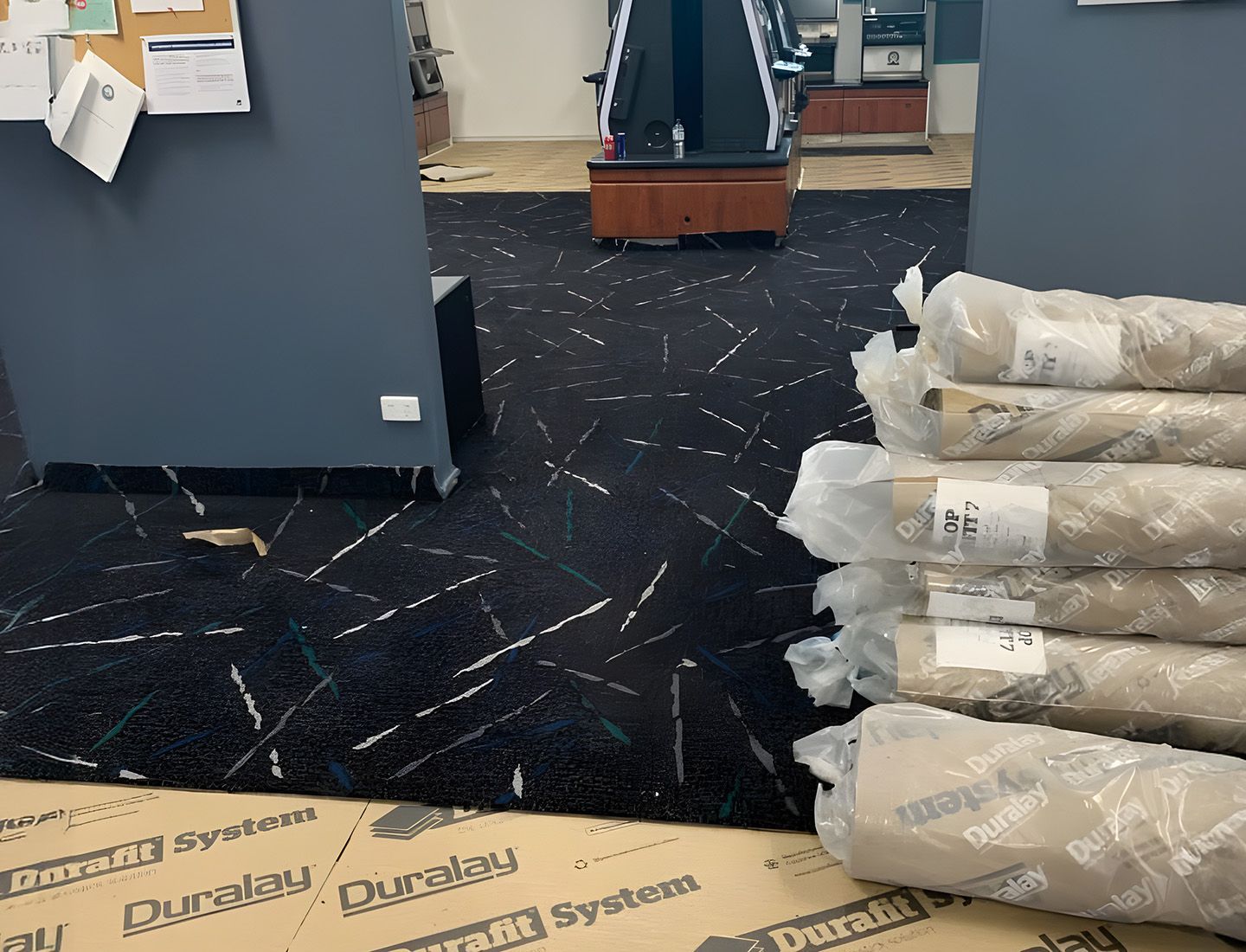
Lifting old carpet gives you the first clear view of the underlay and subfloor beneath it. That can reveal conditions that are impossible to judge accurately from the surface. Installers may find heavily compressed underlay, crumbling foam, accumulated fine grit, old stains or evidence of previous moisture exposure. The subfloor can then be checked before anything new covers it.
For example, imagine a Port Macquarie homeowner with 15-year-old carpet that still looks reasonably tidy in the lounge but feels noticeably hard near the sliding doors. Once the carpet is lifted, the pile itself may prove less problematic than the compressed underlay beneath the main traffic path.
That inspection matters because replacing carpet is rarely just a simple swap.
Professional carpet installation can involve uplifting and disposing of the existing flooring, assessing the exposed floor, installing suitable underlay and correctly fitting the new carpet.
How do wool, nylon, polyester and polypropylene carpets age differently?
Different fibres wear in different ways, which is why asking "how long does carpet last?" without knowing the material only gives you part of the answer.
How long does wool carpet last?
Good-quality wool is known for resilience and can provide a long service life when matched to the right room and maintained correctly. A lifespan around 15–25 years can be achievable in suitable residential conditions. Wool carpet lifespan still depends heavily on construction and traffic. Check older wool for flattened pathways, staining, moth damage and the condition of the underlay rather than assuming the fibre itself determines when replacement is due.
How durable is solution-dyed nylon carpet?
Solution-dyed nylon is widely used where durability and stain resistance are priorities. Depending on the specific product, installation and household conditions, around 10–20 years can be a reasonable expectation. The colour is incorporated into the fibre during manufacture, which supports strong colourfastness and stain resistance. However, no fibre is immune to crushing, abrasive soil or years of heavy foot traffic.
How long does polyester carpet last?
Polyester can provide good softness and colour performance, but product quality varies considerably. A broad lifespan of around 5–15 years is more useful than assuming every polyester carpet will perform identically. In busy areas, pay particular attention to crushing and matting.
How long does polypropylene carpet last?
Polypropylene, also called olefin, is commonly chosen for its affordability and resistance to certain stains and moisture. In residential settings, roughly 5–10 years is a useful general range. Again, construction matters. A dense, well-chosen product in the right room can perform very differently from a budget carpet exposed to constant traffic.
Should you replace carpet before selling or between tenants?
Not necessarily. The condition of the carpet should drive the decision. For homeowners preparing to sell, worn carpet can affect the overall presentation of otherwise well-maintained rooms. However, replacing perfectly serviceable carpet purely because it is older may not always make sense.
For landlords, the gap between tenancies provides a practical opportunity to inspect wear without furniture in the way. Look closely at traffic lanes, stains, edges, transitions and cushioning, and consider whether another tenancy is likely to push an already tired floor beyond a reasonable standard. In both cases, an assessment can help distinguish a carpet that needs cleaning from one that has reached the end of its practical life.
When should you arrange a carpet replacement assessment?
If your carpet is ticking two or three of the warning boxes above, it is worth comparing what is available in carpet in Port Macquarie while you assess whether replacement makes sense. A measure is also useful when the carpet looks acceptable but feels poor underfoot. Once the existing floor is lifted as part of the replacement process, the condition of the underlay and exposed subfloor can be properly checked.
Still not sure whether you have another year left in it? Book a free measure and quote with Geoff Thompson Flooring. Our team can help you assess your existing flooring, discuss suitable replacement options and plan your carpet installation in Port Macquarie if the current carpet has genuinely reached the end of its useful life. The main takeaway is simple: do not replace carpet just because of its age, but do not judge it on appearance alone either. Look at the pile, feel the cushioning, consider its moisture history and pay attention to what the floor is telling you underfoot.
Frequently Asked questions
How often should you replace carpet?
Many residential carpets provide roughly 8–20 years of useful service, although the range varies significantly by fibre, construction, traffic and maintenance. Replace based on condition rather than following a fixed calendar.
How do you know when carpet needs replacing?
Look for permanent flattening, bald or frayed areas, recurring odours, rippling, damaged backing and a hard or uneven feel underfoot. Multiple symptoms usually tell you more than the carpet's age alone.
Is 20-year-old carpet too old?
Twenty-year-old carpet is old enough to warrant a close assessment, but it does not automatically require replacement. High-quality carpet in a lightly used, dry room may remain serviceable, while heavily trafficked carpet can wear out much sooner.
Should 30-year-old carpet be replaced?
Most 30-year-old carpet is well beyond the typical lifespan of many residential products. Check the pile, backing, underlay, odour and any history of moisture damage before deciding, rather than relying on age alone.
Can you replace carpet without replacing the underlay?
It may be physically possible in some situations, but reusing old underlay can undermine the comfort and performance of a new carpet. According to industry best practice, the underlay should be assessed for compression, deterioration, damage and suitability for the new flooring before installation.
Why does my carpet feel hard even though it still looks good?
The underlay may have compressed or deteriorated beneath the carpet, particularly along frequently used pathways. Fine grit can also work below the pile over time, so the condition underneath may be worse than the visible carpet suggests.